I presented a paper at the 8th Cross-Sector Social Interactions (CSSI) Symposium in Wageningen, as part of the panel Transdisciplinary research approaches for understanding and transforming food systems. The paper – co-authored with Karin Schroën, Art Dewulf, Huub Dijstelbloem, and Tamara Metze – looked at circulating visualisations of nanotechnology in food and food packaging.
The starting idea was that images online are not static. They get shared, reused, recontextualised – sometimes landing in a completely different conversation from the one they started in. We wanted to know what happens to an image’s meaning when that happens. Does an image carry its original message with it wherever it goes? Or does it pick up a new one depending on where it lands?
To find out, we traced visuals about nanotechnology in food – a topic that’s both promising and controversial – starting on Twitter and following them out across the wider web. At every stop, we looked not just at the image itself, but at the text sitting next to it, since the two together are really what create meaning.
What we found: images that circulated heavily within nanotech-in-food conversations on Twitter often ended up – on the open web – in topic areas that had nothing to do with nanotechnology. And when an image crossed into a new topic, something interesting happened – the tone of the surrounding text shifted more often, and entirely new storylines emerged around the same picture.
The take-home message: images move, change, accumulate meaning over time, and should be studied through a lens of circulation. If we want to understand how public opinion forms around controversial topics like nanotechnology in food, it helps to think of images while also referring to their ‘former life’ – the traces of meaning they might still carry with them.
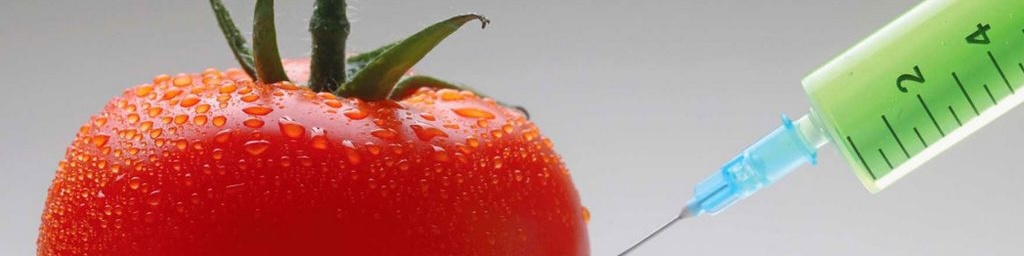
Image credit: nonegmo.com (cropped from original)
